

Assisted living communities in Blairsville, PA generally balance a resident’s right to welcome guests with the safety, privacy, and comfort of everyone who lives there. Visitors are usually welcome, but each residence may have procedures covering entry, identification, quiet hours, overnight stays, health precautions, and conduct.
Can residents receive visitors whenever they want?
Pennsylvania assisted living residents have the right to receive visitors at any time, as long as visits do not adversely affect other residents. This means a residence generally cannot impose a blanket rule that prevents a resident from seeing family members, friends, advocates, or other chosen guests without a reasonable basis.
That right does not mean every visitor may enter every area without limits. A residence may establish practical rules to protect residents and staff, preserve privacy, and respond to safety concerns. For example, visitors may be asked to:
- Sign in and out at the entrance
- Wear a visitor badge
- Stay in approved areas when visiting another resident
- Follow infection-control instructions
- Avoid loud, threatening, or disruptive behavior
- Leave temporarily during an emergency or safety event
Residents also have the right to decline a visit. Staff should not allow a guest into a resident’s private living space when the resident has clearly said the visit is unwanted.
What happens when a visitor arrives?
Most assisted living residences use a check-in process, especially when the main entrance is secured. A guest may need to identify the resident being visited, provide a name, and record the arrival time. Some communities use a reception desk, while others rely on a secure entry system or staff-controlled access.
These steps are not necessarily signs that visitation is restricted. They help staff know who is in the building during a fire, severe weather event, medical emergency, or other situation requiring an accurate headcount.
Family members who visit regularly may still need to follow the same entry process. A residence may also ask frequent visitors to provide updated contact information or agree to basic health and safety expectations.
For households in the area, seasonal conditions can affect visits. Snow, ice, heavy rain, and early winter darkness may make outdoor drop-offs or walking paths less safe. A residence may direct visitors to a particular entrance or ask them to avoid arriving during a hazardous condition.
Are there limits on visiting hours?
A resident’s legal right to receive visitors does not always mean that every common area is open around the clock. A residence may designate quiet hours, restrict access to certain service areas, or ask visitors to keep noise low during sleeping, medication, or meal periods.
The practical question is whether a rule controls the residence’s operations or improperly prevents a resident from receiving guests. A reasonable quiet-hours policy may limit noise and activity without banning a peaceful visit. If a visitor needs to arrive late, the residence should explain how after-hours entry works.
Before move-in, residents and families should ask:
- Are visits allowed in the resident’s apartment or room?
- Is there a separate lounge or private dining space?
- How are late-night visitors admitted?
- Are there limits on the number of guests?
- What happens if a visitor arrives during a scheduled activity or meal?
- Are visiting rules different during an outbreak or emergency?
The answers should be available in the residence’s written policies or admission materials.
Can visitors stay overnight?
Overnight guests are usually handled through the residence’s own occupancy, safety, and contractual policies. A short visit may be permitted, but the residence may require advance notice, approval, registration, or use of a designated guest space.
An overnight guest generally cannot use the resident’s apartment as an undisclosed second residence. Concerns may arise if a visitor receives mail there, keeps substantial belongings on-site, uses services intended for residents, or remains for an extended period.
Ask specifically about:
- Whether overnight guests are permitted
- How many nights are allowed
- Whether advance approval is required
- Whether a guest may sleep in the resident’s apartment
- Whether guest meals or other services involve a charge
- Whether the guest must provide emergency contact information
- Whether children or pets may stay overnight
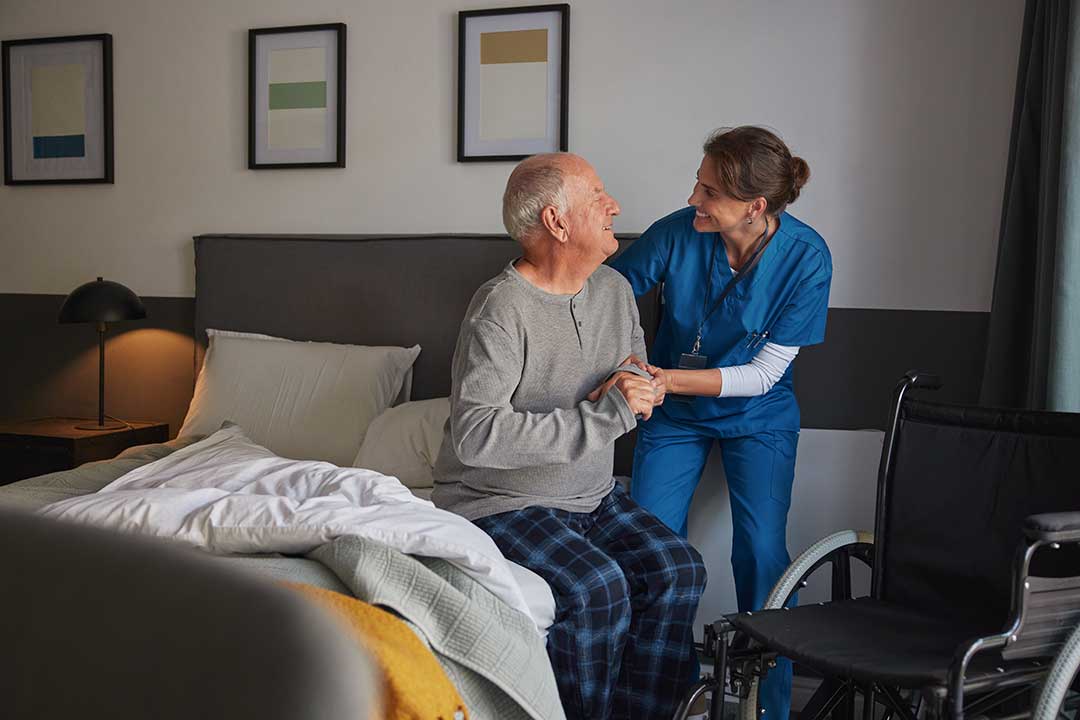
A policy should be applied consistently while still accounting for the resident’s privacy, relationships, and personal choices.
Can children, pets, or service animals visit?
Children are commonly permitted to visit, but adults remain responsible for supervision. A residence may limit access to kitchens, medication areas, maintenance spaces, or other locations that could present hazards. Children may also be asked to follow quiet-hour rules.
Pets can be more complicated. A community may allow visiting animals under conditions involving vaccinations, leashes, behavior, cleanup, and resident allergies. A service animal is different from an ordinary pet and may be protected by disability-rights laws. The residence may ask limited questions needed to determine whether the animal is a service animal and what work or task it performs, but it should not demand unnecessary medical details.
A resident who wants regular visits from an animal should review the policy before the first visit. This is especially useful when other residents have allergies, fear of animals, or medical vulnerabilities.
What if a visitor causes problems?
Staff may intervene when a visitor threatens someone, damages property, brings prohibited substances, attempts financial exploitation, violates privacy, or repeatedly disrupts other residents. A residence may restrict or remove a visitor when there is a genuine safety or rights-related concern.
A restriction should be explained clearly. Residents and their designated representatives should be told what conduct led to the action, how long the restriction applies, and whether there is a review or grievance process. A family disagreement alone does not automatically give staff authority to choose who a capable resident may see.
If a resident has a court order, protective arrangement, or documented safety concern involving a particular person, staff may need to follow that legal direction. Residents should share relevant information with the appropriate administrator and keep copies of important documents.
How are visits handled during illness outbreaks?
Assisted living communities may temporarily change visitation procedures during an infectious-disease outbreak, public health emergency, or serious building hazard. Possible measures include screening, masking, hand hygiene, physical distancing, outdoor visits, visitor limits, or temporary postponement of nonessential visits.
These changes should be based on a real health or safety concern and communicated to residents and families. Even when ordinary visits are limited, residences should consider safe ways to preserve contact, including telephone calls, video conversations, window visits, or visits arranged with additional precautions.
Families should avoid visiting when sick, recently exposed to a contagious illness, or experiencing symptoms such as fever, vomiting, or significant respiratory problems. A resident may be especially vulnerable even when the visitor’s symptoms seem mild.
What should residents ask before moving in?
Visitor policies can affect daily life as much as meal schedules or transportation arrangements. During a tour or pre-admission discussion, ask to read the written rules rather than relying only on a general verbal description.
Useful questions include:
- Can visitors enter at any time?
- What identification or sign-in requirements apply?
- Are there restrictions on the resident’s apartment?
- How are privacy and roommate preferences handled?
- Are overnight guests allowed?
- What rules apply to children, pets, and service animals?
- How are visits handled during winter weather, emergencies, or outbreaks?
- Who reviews complaints about visitation?
- Can residents receive private visits from an advocate, attorney, clergy member, or other support person?
A clear policy should protect resident choice while recognizing that assisted living is a shared setting. For local families, understanding the rules in advance can prevent confusion during holidays, family gatherings, severe weather, and changes in a resident’s health or living arrangement.
